
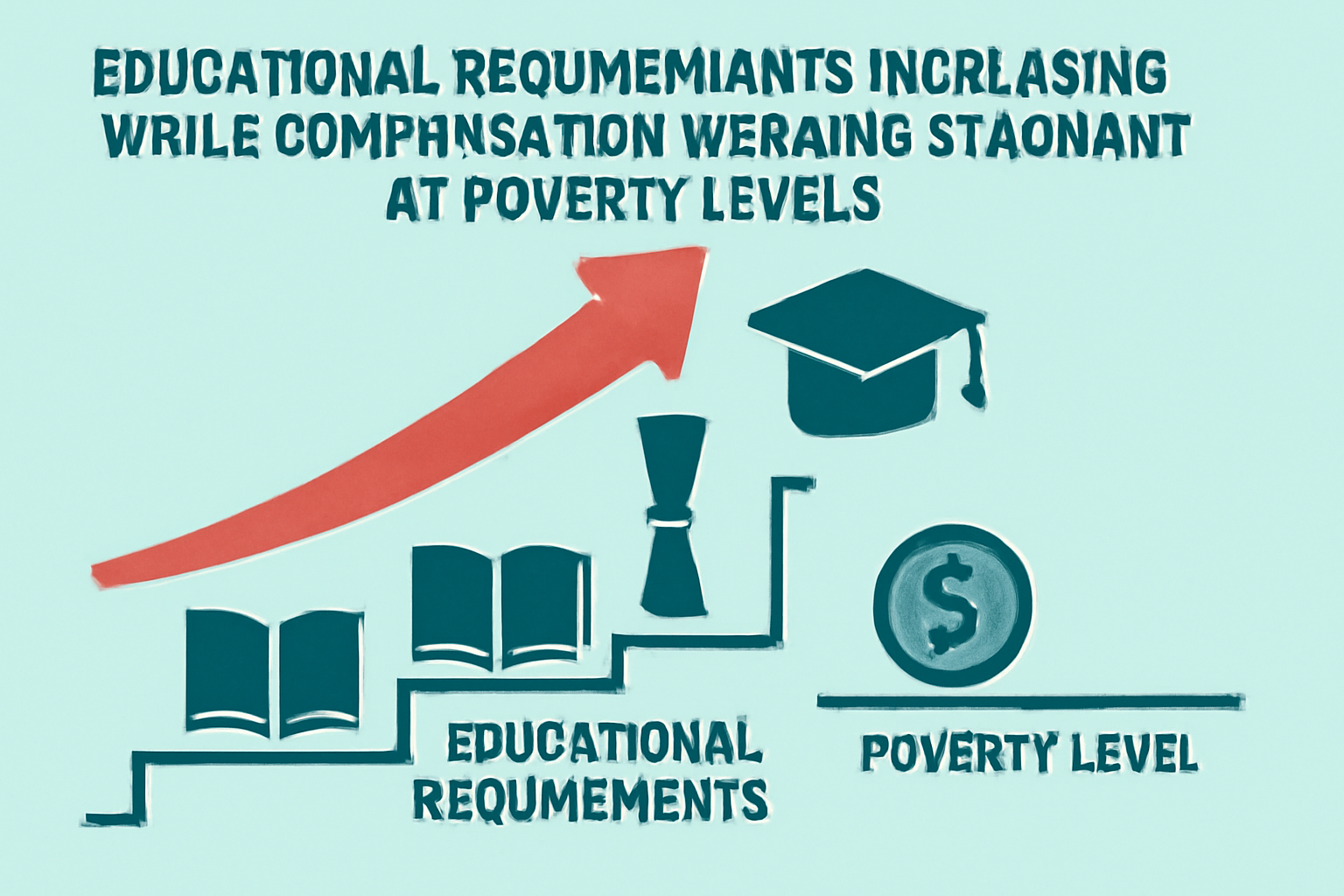
A bachelor's degree requirement for minimum wage work poses several significant challenges for care workers across various settings. This requirement can create barriers to entry for individuals who are otherwise qualified through experience, skills, and compassion but lack formal education credentials.
The imposition of a degree requirement overlooks the diverse and practical skill sets that care workers develop on the job. These skills, including empathy, patience, and problem-solving, are often more indicative of success in care work than formal education. Moreover, requiring a bachelor's degree for low-wage positions may exacerbate staffing shortages in the care industry, as fewer individuals will be eligible or willing to assume these roles due to the financial and time commitments involved in higher education.
Additionally, imposing such educational prerequisites can disproportionately affect marginalized groups who may have less access to higher education. This limitation can lead to a less diverse workforce, reducing the breadth of cultural competency and lived experiences that are crucial in providing inclusive and empathetic care.
Educational requirements for minimum wage work can also strain existing care workers who may feel pressured to attain a degree to remain competitive or secure in their positions. This pursuit can lead to financial burdens from student loans and potential burnout from juggling work, study, and personal responsibilities.
Policymakers and employers must carefully consider the implications of requiring higher education for roles where hands-on experience and interpersonal skills are paramount. By focusing on practical competencies and providing pathways for advancement through training and certificates, the care sector can better support its workforce and address the critical demand for capable, compassionate care workers.