
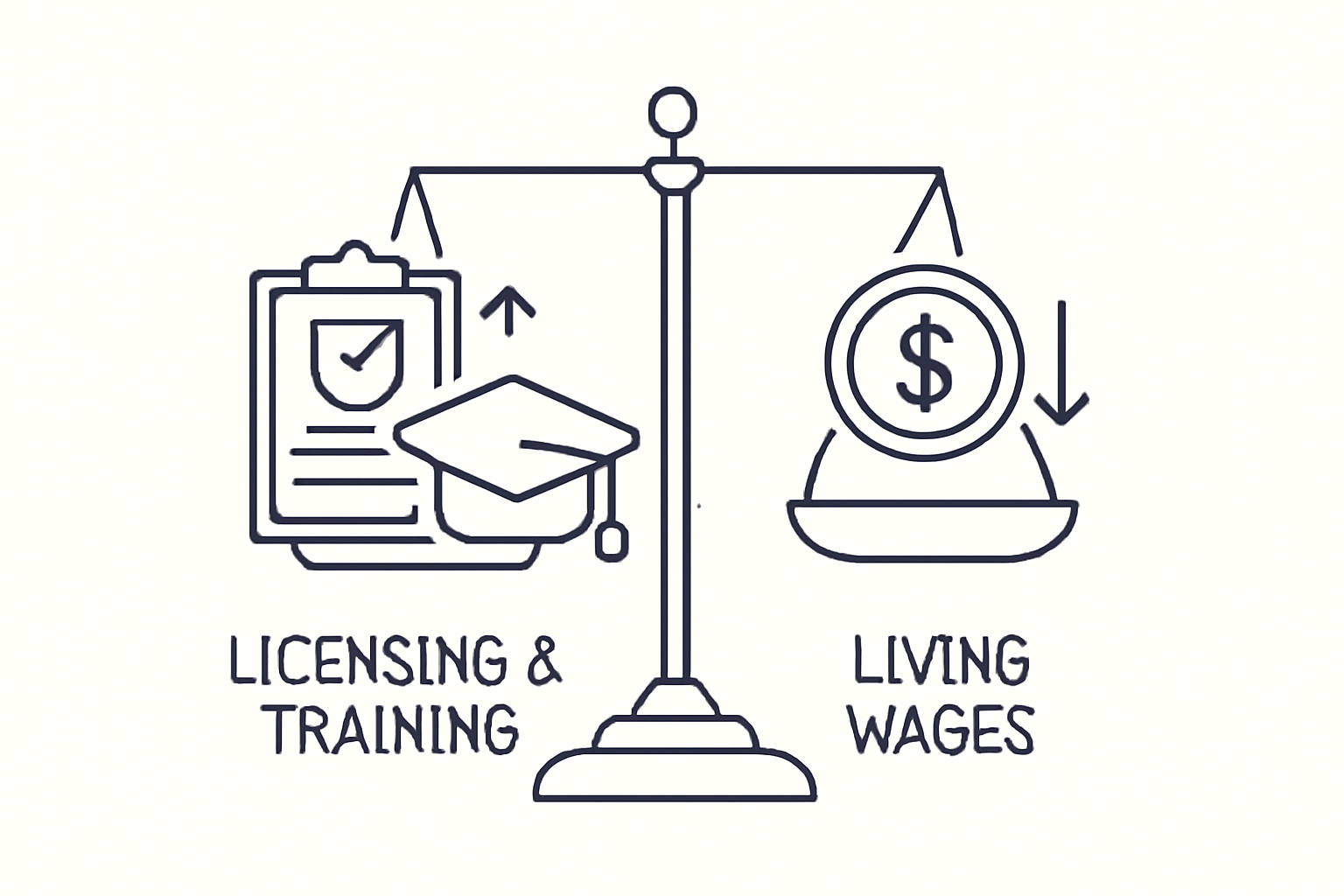
Care workers grapple with a myriad of challenges, significantly impacting their professional satisfaction and livelihoods. Despite the demanding nature of their work, involving close interaction in personal spaces, care workers often find themselves undercompensated. In many cases, earning less than retail workers despite possessing substantial qualifications, including multiple certifications, is a stark reality.
The responsibilities of care workers are diverse and include administering medications, providing emotional support, assisting with day-to-day tasks, and ensuring the physical well-being of those in their care. These demands necessitate a high level of skill, emotional intelligence, and patience, yet compensation frequently does not reflect these nuances.
The discrepancy in pay compared to lower-skill jobs like those in retail can be attributed to several systemic factors. First, care work is predominantly undervalued due to long-standing societal perceptions. It is often seen as "low-skilled," despite the requirement for extensive certification and hands-on training. The care sector also struggles with budget constraints, as funding for these services doesn't always match demand or the essential nature of the work provided. This financial constraint limits the ability of care organizations to offer competitive wages.
Moreover, the economic structure of care work is heavily influenced by governmental reimbursement rates set for healthcare services. These rates are typically low, leading to a trickle-down effect where frontline care workers experience the financial squeeze. Despite having mandatory certifications, care workers frequently lack strong bargaining power, having limited union representation compared to other sectors, such as retail. This contributes to a stagnant wage landscape, even as the responsibilities and pressures of care work continue to grow.
Addressing these challenges requires systemic change in the perception and financial valuation of care work. There is a crucial need to elevate the profession through fair compensation reflecting the vital role these workers play in society, supported by policies that prioritize equitable pay structures.